Pacific Loon


Just a quick update to keep people in the loop…


On Wednesday morning, Dave Smzyr found an adult Pacific Loon on Kempenfelt Bay in Barrie. I was down lakewatching at Point Edward in Lambton county at the time (didn’t see much besides a Parasitic Jaeger), so I decided to wait to chase it until the following day.


Most birds I would try and chase ASAP, but with this bird I wasn’t too concerned. For over 10 years there has been at least one (usually more) Pacific Loon on the Barrie waterfront in the fall. These birds stage here with the massive number of Common Loons and gorge on the concentrations of fish in the bay. The loons normally show up late September/early October and remain through mid November, so there wasn’t really a rush for me to see it. 


On Thursday morning I left Guelph with Alessandra and headed up to Barrie. By the time we got there it had warmed up a bit and there was considerable heat shimmer over the bay. 

We started off our search at the small park the bird had first been seen at, then moved up the shoreline until we were at the edge of the bay where it opens up to Lake Simcoe. Common Loons and Red-necked Grebes were around in large numbers, with several hundred of each scattered across the water. A large number of them were lost beyond the heat shimmer, making search for Waldo a bit of a challenge. 

Eventually we returned to Tyndale Park, where we had started earlier, and took another scan. Apparently a large raft of loons had moved closer while we were gone, as there were now around 200 within scoping distant. I worked through the flock… then wham, a gorgeous adult Pacific Loon! #345! This was a lifer for Alessandra too! Pacifics in alternate plumage are truly gorgeous, their nape in the sunlight is such a vibrant golden colour that photos can’t really capture.


Speaking of photos… here are some of the worst ones I’ve taken this year! IDable? Maybe 


I’m spending this weekend at Van Wagner’s Beach in Hamilton, where I hope to add Pomarine Jaeger. There is the possibility of Red Phalarope too, and maybe Northern Gannet or Purple Sandpiper. So potentially I could have a new Ontario record by Monday!


Ontario yearlist @ September 30th - 345

OFO Convention & a new bird


  Every year the Ontario Field Ornithologists hosts a convention during the last week of September, during which time the members are invited to an interesting area of Ontario for a weekend of birding hikes and a banquet. This year, after a two-year Covid imposed hiatus, the OFO brought the convention back... with the destination this time being Point Pelee.

From a big year perspective, it made sense to go to the convention since so many birders in one place makes the rarity potential pretty high. On top of that, I had agreed to lead a bird walk at Holiday Beach with Alessandra on Friday, and she also had one on Sunday at Point Pelee.

We arrived at Holiday Beach late on Thursday evening and settled down for the night at the Holiday Beach Inn (Chevy Cobalt edition). While the location of this hotel is quite ideal for birding, the beds, bathroom and room service leave much to be desired for. 

The next morning, we met our hike participants at 9:00am and started off the day with a walk around the forested trail system there. A steady stream of Blue Jays was already passing overhead at that point, and some Broad-winged Hawks were taking off from the trees that they had roosted in overnight. Songbirds were also around in decent numbers, with some highlights including Orange-crowned Warbler, Philadelphia Vireo, Rusty Blackbird and Purple Finch. Among the 14 birders that turned out were some familiar faces from the Bruce Birding Club, so I enjoyed catching up with some friends from home during the day.

Around 11:00am we moved over to the Holiday Beach Hawkwatch Tower, a spot I have only briefly visited once before but have always wanted to spend time at. The conditions were basically perfect for hawkwatching, cool temperatures, a nice North wind and a blue sky dotted with fluffy clouds (nice to spot raptors against). Just after arriving up the tower, a kettle of around 500 Broad-winged Hawks was spotted heading south. For a Bruce County birder such as myself, seeing over 20 hawks at once is pretty exciting... so these larger numbers were a blast. We ended up staying there with the group until after 2:30, during which time we enjoyed one of the best Broad-wing flights since the the 1990s! It was so lucky for the tour... managing to chance into the best day of the fall at Holiday. Our group saw a few less since we didn't stay the whole time, but the days total was over 33,000 birds!! A Truely amazing spectacle to behold. The last kettle was over 4,000 birds strong, and in perfect light too. No words honestly.... just wow. Other highlights included: 87 sharp-shinned hawks, 27 Northern Harriers, 27 American Kestrels and a Peregrine Falcon. Also 80,000 Blue Jays!! We ended with around 85 species for the day, so a pretty successful hike! Definitely the best hawk flight I have ever witnessed.


- Broad-wing Madness 

- Peregrine Falcon

- More Broad-wings

- Blackpoll Warbler

- Northern Harrier

- Yellow-rumped Warbler

- Broad-winged Hawk

- Scarlet Tanager

- Natural birding stance


On Saturday Alessandra and I joined a hike lead by my good pal Quinten Wiegersma at Lake St. Clair NWA. The weather wasn't as nice as it was on the previous day, and throughout the day we experienced several bouts of rain. In spite of that it was a pleasant day in the field with a friendly group of birders. `As far as the birding went it was pretty decent and we ended with over 80 species... including Peregrine Falcon, American Golden-plover, Orange-crowned Warbler and over 300 Broad-winged Hawks. Just for fun we showed up black tie for the hike... This was the result.

- Peak birding attire

- Quinten not posing at all


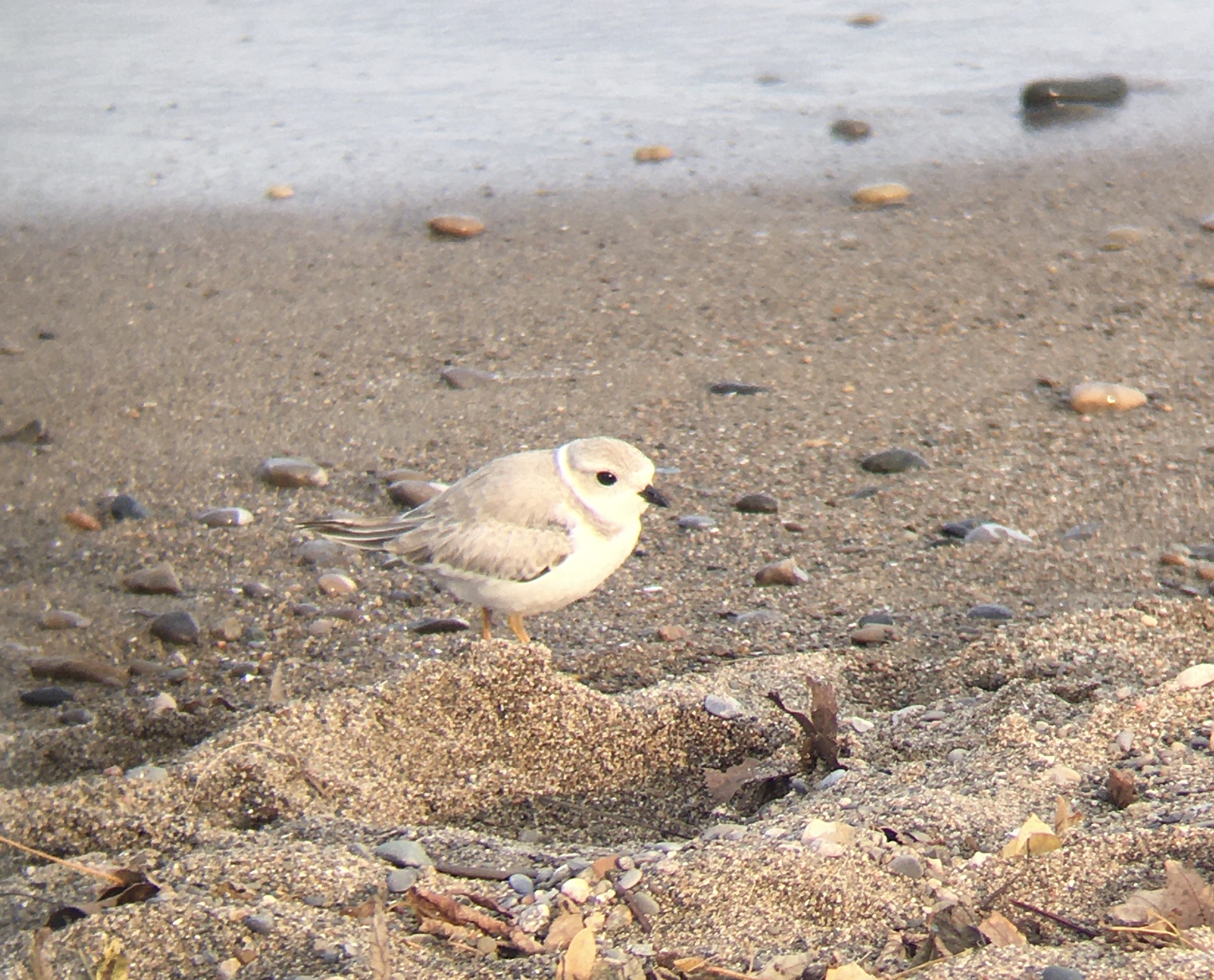
That evening I spent exploring Point Pelee with Alessandra and had a gourmet dinner of squash soup and pasta on the cookstove. It was a fairly quiet evening for birds in the park, but a nice highlight was spending some quality time with a juvenile Piping Plover that had been hanging around the tip for a few days.

- Piping Plover
- Tip birding in style
- Alessandra photoing the plover

On Sunday morning Alessandra lead a hike Point Pelee, so I tagged along and scanned the lake for rarities since the wind was promising. It had been raining for much of the night, and when we arrived at the Visitor center it was still quite miserable... which coupled with it being the last day of the convention meant that very few birders turned up... a total of three for the hike! Ironically it cleared up quite fast, and within half an hour the rain was over, and it actually turned into a warm & sunny day! Over 70 species total, including the continuing juvenile Piping Plover. There were also a few Lesser Black-backed Gulls and a late season Common Tern at the tip, and a late Canada Warbler at Sparrow Field. 

Around noon a Brant was found by Steve Charbonneau at Erieau, conveniently just as the hike was wrapping up. In an hour we were over scanning the bay at Erieau, where a small goose with an all-dark neck was hunkered down with a flock of Canadas. #344!  Basically, on the way home too, so it wasn't even an out of the way chase.

- Brant
- Brant scanning


As soon as we returned back to Guelph, Michael McAllister had the nerve to find a Red Phalarope at Pelee... Too late in the day to drive back too.... Grrrr.... How it goes sometimes though! 


Ontario Yearlist @ Setpember 27th - 344

September Update

Apologies to my loyal followers... It has been a while since my last post! To sum things up, it has been a pretty quiet September for birding so far. Not just for me either, there just haven't been too many rares around Ontario... Though to be fair rarity season tends to really kick into high gear around mid-October, so hopefully there are many new additions on the horizon.


Since my last update I have added 3 species to my yearlist, which brings me up to 343 species!


All of my additions have been pelagic birds, well pelagic from an Ontario sense anyways. For us inland birders, a lot of fall excitment comes from staring through spotting scopes to see distant specks flying out over the lake. We are hoping these specks are jaegers, which if you haven't seen them before look like what you'd get if you mashed a falcon and a gull together. There are three different species, the more common Pararistic and then occasionally Long-tailed and Pomarine. All 3 breed on the Arctic tundra and winter on the open oceans of the world (they get around!), so they aren't birds you see without trying. Most inland states and provinces don't get very many jaegers, with the exception of the Great Lakes area, where they pass through annually in small numbers. The timing of their migrations is a bit different, with Parasitic moving throughout most of the fall, Long-tailed in late August and early September, and Pomarine moving late in the season (starting in mid-October and going all the way through Novmeber).You won't see these birds randomly though, and to see them you have to spend time lakewatching in Hamilton and Kettle Point during the right conditions.... Which are east/northeast winds for Hamilton and north/northwest winds for Lambton.

 For a big year you need all three jaegers, but if you aren't careful Long-tailed and Pomarine can be easy to miss. 


On September 4th east winds were forecasted for the Hamilton area, so I drove down and spent the day lakewatching. In typical Van Wagner's Beach fasion, it was raining and foggy... Not fun conditions for this type of birding! Because besides getting damp and soaked yourself, your optics get all wet and foggy, requiring constant cleaning with a dry cloth. Anyways I spent around 6 hours there and saw a Parastic Jaeger (341) and a few distant jaegery specks that were probably parasitic too... but just too far and lost in the fog to be sure.

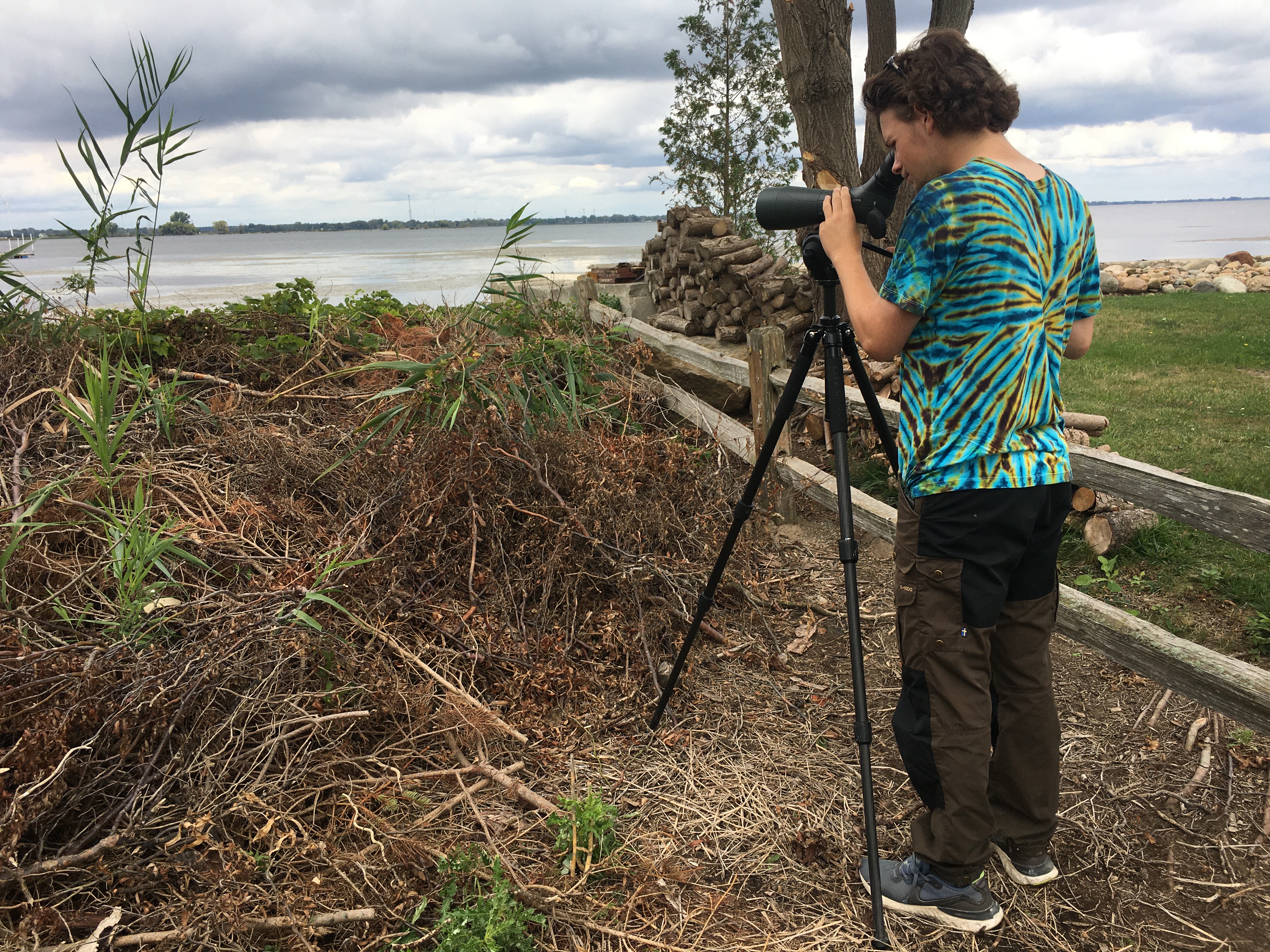
- lakewatching at Van Wagner's

The following day there were also strong east winds, however this time there was no rain, and it was actually sunny a few times! After being there for just over an hour, a flock of 4 jaegers flew in off the lake and passed by fairly close heading inland. 3 parasitics and a gorgeous adult Long-tailed Jaeger (342) with full tail streamers! Always a treat to see one of these guys, and a bird I was glad to get out of the way for the yearlist. The rest of the day was fairly quiet, with a few more parasitics being the only other highlights. It is always an enjoyable experience lakewatching (I'm one of those people who enjoys distant specks remember) and getting my first decent fall days of 2022 in was a nice treat. Unfortunately, they were too far for my camera and I didn't have time to digiscope, so no photos to share : ( 


Fast forward two weeks. I did a few birding trips around southern Ontario (Pelee, Lambton Shores), but they were farily quiet save for the usual suspects. I was hoping to get Sabine's Gull out of the way, as the window for their migration period was rapidly closing (a rare bird past early October). Similar to jaegers, Sabines also breed in the Arctic and winter on the ocean... but every fall Ontario sees a small number that take the inland route. I had missed Sabine's by a day at Hamilton and Pelee, then I just missed a flock by Kettle Point in Lambton... new nemesis bird perhaps? 


Then on September 14th Bruce Di Labio found a juvenile Sabine's Gull while birding at Lake Dore in eastern Ontario. I assumed the bird wouldn't stick around very long, but then it was seen the next day, and again on the weekend. I wasn't too enticed to chase this bird, as it was over a 5 hour drive, for a mere "code 2" species. At the same time though it is one of those birds that could slip by easily if you let it... So on September 19th I made the trek out east, joined by my wonderful girlfriend Alessandra. 

Eastern Ontario is a scenic place in the fall, and even though the peak of fall colours are still a bit of time away, some nice shades of reds and yellows were beginning to appear across the rolling forest hills. Soon enough we had arrived at Lake Dore, a smallish lake surrounded by a dotting of quaint cottages. For the entire drive over it had been nice and sunny, but that changed 10 minutes before the lake and we encountered light fog and cloudy skies that threatened a thunderstorm. For 40 minutes we scoured the lake, sorting through large numbers of Bonaperte's Gulls and Common Loons. Then, my scope panned over a slightly larger gull with a brown back and dark, triangular patches on it's wingtips. Sabine's Gull (343), check! We enjoyed watching it for a few minutes as it foraged among a flock of Bonaparte's, before it lifted off again and disappeared down towards the far end of the lake.


A few photos…. Also if you want to see a video check out my eBird list Here

- Sabine's Gull


The timing turned out to be quite good, as just after we left the thunderstorm hit, and for the next half hour I drove through torrential rain, lightening and hail! With Sabine's Gull I tied Josh's 2012 list and Geoff's 2022 list of 343, so I now have the 2nd highest big year total in Ontario... Just for some random info!


That brings me up to date again! If anyone reading is going down to the OFO convention (and leading a hike on Friday) this weekend I may see you there...


Ontario yearlist @ September 21st - 343


Big Year Review and Thoughts - 2/3 of the way through


I have been meaning to do this post for a few months, but I just haven’t gotten around to it until now. Basically this is just for the folks that want to know all the stuff about the numbers game of a big year… so if you’re just looking for photos of cool birds ~ turn away now : )


So far this year I have seen 340 species, which is around 10 species more than I was hoping to have by this time. There are a few reasons why I’m ahead of my predicted pace… mainly because two things have gone well for me this year.

1) - A warm December allowed for many rarities to survive into the new year, including even a hummingbird! I saw 11 OBRC rarities in January, which is phenomenal for Ontario… average for a big year is maybe 4 or 5.

2) - A fantastic spring for rarities, and also considerable luck because almost all of those birds were chaseable.


Here’s a list of how many birds in each code category I’ve seen. If you need a refresher on what the codes mean check out This post...

Code 1 species seen - 203 (100% of the 203 code 1s)

Code 2 species seen - 71 (97.2% of the 73 code 2s)

Code 3 species seen - 35 (76% of the 46 code 3s)

Code 4 species seen - 24 (58.5% of the 41 code 4s)

Code 5 species seen - 4 (percentages not useful for code 5 & 6s as they are big rarities and there have been so many over the years)

Code 6 species seen - 3


So, now it is late August and I only need 6 more birds to tie the record, and 7 to break it. I have gone through my list of targets multiple times and I feel pretty  confident that I will cross paths with 10 of these code 2 and 3 birds. Below is a list of my targets for the remainder of the year, along with their respective codes. Just for fun, as the season goes on, I will mark off the ones I have seen on the list with a *.

- Brant (code 2)*

There are always a good number in eastern Ontario in the fall, plus a scattering of sightings around western Lake Ontario So it should be an easy enough chase.

- Purple Sandpiper (code 3)*

Purple Sand can be a bit tricky, as some years there just aren't many around in the fall. I plan on spending a good amount of time birding around western Lake Ontario though, so I should cross paths with one.

- Red Phalarope (code 3)*

In the past I have had fantastic luck with Red Phalarope, finding several and seeing a few others too. There are always at least one or two around in Southern Ontario in the fall, so I'm not overly concerned about it. Cocky foolishness? Maybe... or maybe not...

- Long-tailed Jaeger (code 3)*

All jaegers are ultra rare in the spring, and lakewatching in the fall is a requirement if one hopes to cross paths with them. They are usually only seen as flybys on lakewatches, making chasing them quite difficult. One of those birds that you kind of have to chase weather to see (east wind in Hamilton, or Northwest wind in Lambton), so that is what I will do. Long-tails are the earliest of the migrant jaegers, with the first ones normally showing up in August and their migration peaking in September. I will try to nail it down as early as I can, because I don't want to go into October needing it.

- Parasitic Jaeger (code 2)*

The most common of the 3 jaeger species by far, and also the one with the longest migration period... Late August all the way into late October. This should be a pretty easy tick at Van Wagner's Beach in Hamilton with a little bit of effort on east wind days. This and Brant are my only remaining code 2s.

- Pomarine Jaeger (code 3)

The most uncommon of the jaegers, Poms don't tend to show up until close to October and continue passing through until late November. This one may be be a bit tricky and require me to spend multiple days in the Hamilton area in late fall (not that I mind haha)

- Pacific Loon (code 3)*

During the last 4 years several Pacific Loons have been seen on Lake Simcoe in Barrie for several weeks in the fall, so hopefully that continues this season and I'm able to get this one out of the way easily. If those birds for some reason don't return, there are usually a few other Pacifics around during a fall season.

 - Sabine's Gull (code 3)*

This species is an annual migrant in Ontario, found very rarely in the spring, but quite consistently in the fall at a few select locations. The peak of Sabine's migration is early/mid September, and the best place to see them is the lakeshore in Hamilton on an east wind (similar to jaegers). So with enough lakewatching effort, nailing down this species shouldn't be too hard.

 Cattle Egret (code 3)*

Cattle egrets are rare but somewhat regular wanderers into Ontario. They tend to start showing up in October and November, with the occasional record in September. There have been 5-10 (or more) reports every fall for the past 15 years, so the chances are pretty high that this will happen again this season. Just have to chase one when it shows up!


So if I see all those species I will be sitting at 349 species, three birds above the record. As I listed above, I have seen 35 of the 46 code three species. The 7 code 3s above are the most likely of the lot in my opinion... with the remaining 4 listed below;


- Black Guillemot 

Pretty unlikely without a trip to the coast of James Bay in the fall. They are fairly regular there as rarities, however they definitely aren't guaranteed, especially on a shorter trip.  

- Western Kingbird

This bird has been a bit of a bugger this year... One was seen in Rainy River before my trip up there, and then again after. Occasionally they show up in southern Ontario in the fall, but then there's the question of if it's chaseable or not (many are one day/one observer wonders). During the last 10 falls there has been a Western Kingbird during 5 of them... Although only 1 or 2 of these birds were chaseable. I would say my chances of getting one are around 40%. 

- Cave Swallow

It really depends on the year for Cave Swallows in Ontario... They tend to show up with strong systems of low pressure in the late fall. Some years there are none, some years there are quite a few across the province. Really depends! I would say maybe 40%/50% chance...

- Smith's Longspur

I really doubt I will get this species. Smith's breed on the coast of Hudson Bay in Ontario, but rarely show up in southern Ontario, and if they do it is usually in the spring. There have been a few winter records, but none since 2017. Never know but I doubt it!


Let's be generous and give me two of those birds, bringing me up to 351. Now that isn't accounting for other rarities at all though (code 4s and above), and there always are some during the fall! So a I am guessing that I will hit 350 fairly easily by mid October (9 top birds, plus one of the bottom list)... but honestly I don't think 360 is out of the realm of possibility. It really depends how good of a fall it is for rares... and how many of those are chaseable. A good hurricane could really make things go crazy... I think we are due for one (been 10 years since the last good one). 

Is 8 code 4s and 2 code 5 or 6s too much to ask for?!? Probably but we shall see!


Now some other interesting stats. Here's how I've been doing every month compared to Josh in 2012  year and Jeremy in 2017.


(JV = Josh Vandermeulen, JB = Jeremy Bensette, KJ = Kiah Jasper)


January

JV - 127

JB -  90

KJ - 132


February

JV - 136

JB - 130

KJ - 145


March

JV - 166

JB - 160

KJ - 167


April 

JV - 230

JB - 227

KJ - 258


May 

JV - 308

JB - 294

KJ - 323


June 

JV - 315

JB - 306

KJ - 331


July

JV - 321

JB - 316

KJ - 333


Aug

JV - 328

JB - 323

KJ - 340


Not too shabby!


Will include a bird photo just cuz...
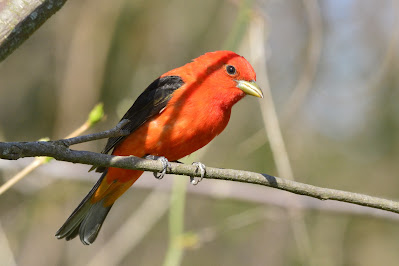
- Scarlet Tanager


Manitoulin Twitch


   On Saturday evening (August 27th) a Glossy Ibis was posted to eBird on Manitoulin Island. The bird was found by Paul Frost, in some small pond surrounded by cattle. It was way too late in the day for me to get there, so I started looking into options to chase it the next day. I was unlucky and lucky in that regard. Lucky because Sunday was my one day off work that week, but unlucky because it was a weekend... So the Chi Chi Maun ferry was fully booked. The 7 hour drive around Georgian Bay to get there wasn't particularly appealing...

It just so happened that my local birding pal Jarmo Jalava was going over to Manitoulin that day (he has a cottage there), and he offered to take me with him and drive me to the ibis! I departed my house around 6:30 that morning and embarked on the hour long drive to Tobermory. I was slightly nervous waiting to board... as during my last experience with a boat (my recent North Carolina pelagic) I got violently seasick. This concern was luckily only that though, and I was fine for the entire trip. Some loons were the only excitment bird wise.

Upon arrival I received word that the ibis had been seen early that morning, so my hopes were high. After a tense half hour of driving we arrived at the pond, where sure enough the ibis was quietly feeding besides a Lesser Yellowlegs. We enjoyed phenomenal views of it, my 2nd ever Glossy Ibis in Ontario and one of my biggest misses from earlier in the year. A relief to say the least!

- Glossy Ibis


After enjoying the bird for a bit we went out in search of Ring-necked Pheasant, another species I needed for the yearlist. Pheasants have recently been re-evaluated by the eBird folks, and going forward the only "countable" population that is deemed self sustaining is on Manitoulin. I had searched briefly on my way back from Rainy River in June, but hadn't had any luck. 
Only a few minutes away from the ibis spot there had been a few recent pheasant sightings, so we headed over to check it out. After about 20 minutes of walking down a quiet country road, I flushed a large grouse-like bird out of the grass beside the road. Ring-necked Pheasant, check. I fired off a few shots as it disappeared behind some shrubs and out of sight,

- Ring-necked Pheasant


After two successful chases, we did a bit of island birding (not too much of note) and then Jarmo dropped me back off at the ferry terminal where I boarded and headed back to Tobermory. Quite a good day, 2 new birds in the span of an hour isn't something that happens much at this stage in the game. Thanks Jarmo : )


Just to keep things up to date, yesterday after work I drove over to the Beeton Sod Farms in Simcoe County and snagged American Golden-plover. One of the few easy code 2 birds that I had left. I knew I would cross paths with one eventually, but I just wanted to get it out of the way now. Only 6 more birds to tie the record now! 

- American Golden-plover


Ontario yearlist @ August 30th - 340

Panama Trip - Part 1

Just after midnight on the morning of February 22nd (I couldn't really sleep due to preflight jitters/trip excitement, so to me it was s...